
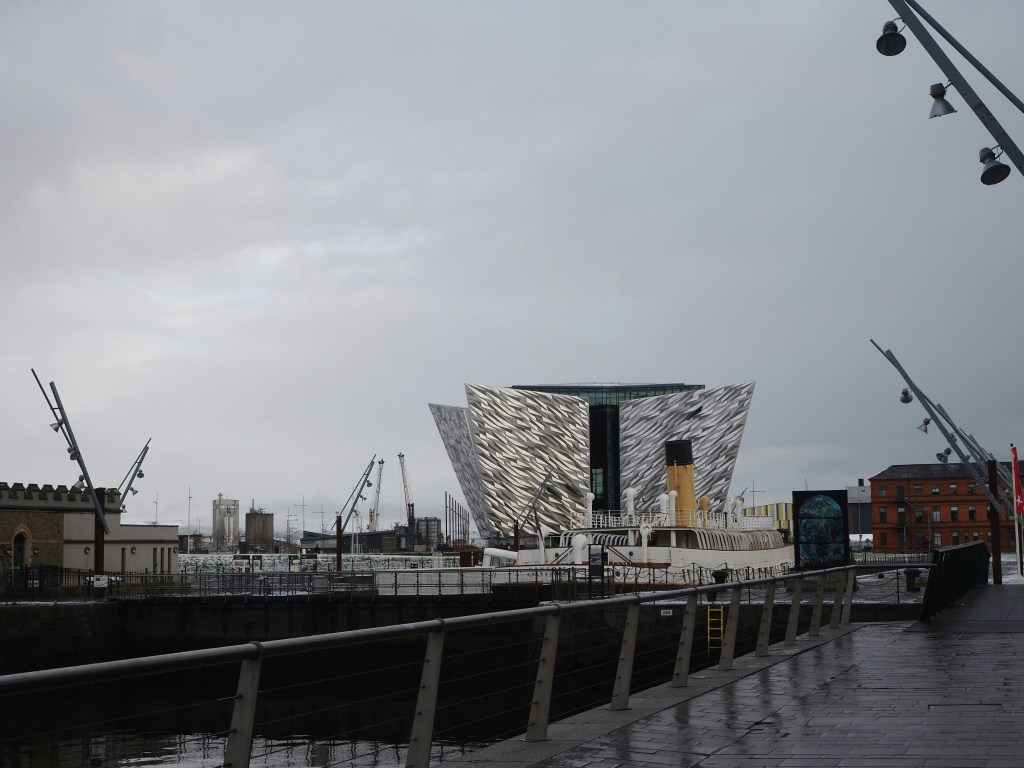
Belfast
The grey skies of Belfast were a familiar, sombre welcome. Jake and Emma had set up a new command centre in a nondescript apartment overlooking the city’s labyrinthine streets. Their new mission, Op Pigweed, was no longer a digital abstraction. It was now a hunt for a ghost with ties to the city’s bloody history.
Their research into The Architect’s blueprint had uncovered a chilling fact: Op Pigweed was linked to the Provisional IRA. Not as a target, but as a source. The “digital parasite” was designed to target and corrupt global financial records, but its final trigger, the key to its full activation, lay with a former IRA figure.
“It’s a backdoor,” Emma said, her fingers flying across the keyboard. “He’s using the old network of IRA safe houses and encrypted dead drops to move the final piece of the code. He’s not using them as allies; he’s using them as a relay. He’s piggybacking on a forgotten network.”
The name that appeared again and again in the encrypted data was Sean Gallagher, a former IRA commander who had disappeared from the intelligence world after the Good Friday Agreement. He was now a ghost, living a quiet life as a local community leader.
“Gallagher isn’t just a part of the network; he’s the key to the final piece of the code,” Jake said, studying an old surveillance photo of the man. “He’s a master of cryptography. The Architect must have found a way to use him without him even knowing it.”
The Surveillance
Their surveillance operation was a return to their roots. They spent days watching Gallagher from a distance, their car a silent sentinel on a side street. He was an unremarkable man, spending his days in a local community centre, his nights in a small pub. He was a puzzle of a man, his past a brutal contrast to his peaceful present.
But he wasn’t alone. One night, Jake spotted them. A pair of silent, professional-looking men in a black vehicle, mirroring their own surveillance. They weren’t police or intelligence. They were The Architect’s people.
“He’s here,” Jake said, his voice a low growl. “He knows we’re here, or he knows Gallagher is the key. It’s a race now.”
The surveillance turned into a three-way standoff, a tense, silent game of cat and mouse. Jake and Emma were not just watching Gallagher; they were watching the men who were watching him. The pressure was building. The Architect was getting closer, and Op Pigweed was still spreading its poison.

The Race
The race to get to Gallagher first became a frantic sprint. The men in the black vehicle were no longer just observing. They were preparing to move.
“They’re going to grab him,” Emma said, her eyes fixed on the surveillance feed. “They’re not going to kill him; they’re going to force him to give up the final code. We have to move.”
Jake threw the car into reverse, the tires screeching. They couldn’t let Gallagher be taken. He was their only link to stopping Op Pigweed.
“We need to get to him before they do,” Jake said. “We have to intercept him. And we have to make sure he’s safe.”
The new operation was in full swing, and it was a frantic, desperate race against the clock. The streets of Belfast became their battlefield, and the prize was not just a man but the key to saving the world from a digital apocalypse.

 In the heart of London - Surveillance at a glance...
Leave a comment